Paint Match Post Mortem
I released Paint Match 5 months ago and now it’s a good time to reflect on how did it go.
First and foremost, it was a hobby project. My goal was not to make money from it, even though people suggested I could. I made this game because I wanted to play it and there were no good paint mixing games around. It was also a learning experience, both in tech (I hadn’t shipped anything major in React before) and in marketing.
The game received 1K mobile installs and 10K browser plays in 5 months. It got 30 total ratings, mostly 5 stars.
What went well
-
Coding and game design
-
I had lots of fun coding and implemented some cool features, such as an efficient auto-solver for the game and an auto-aim (yes, for a paint mixing puzzle game)
-
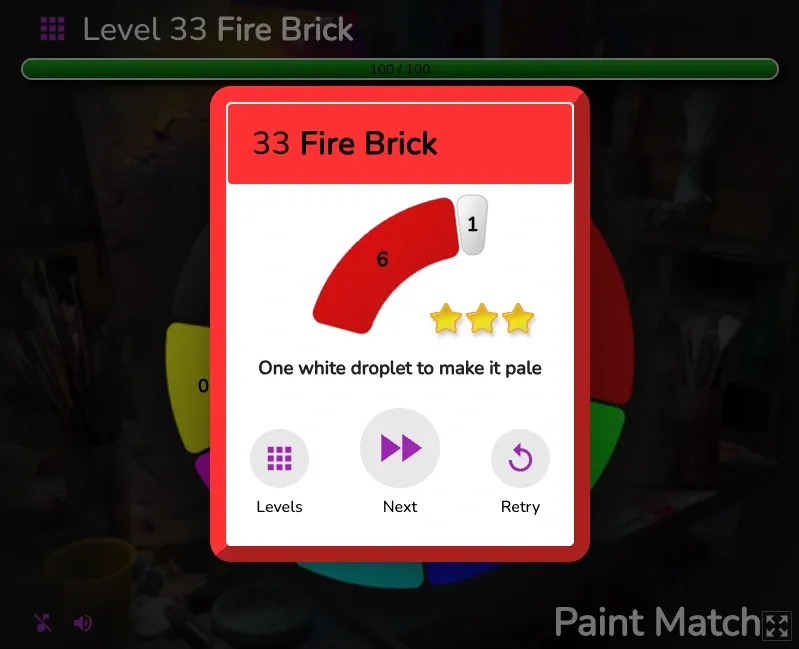
I’m particularly proud of the tutorial I designed. Primarily, it consists of a series of levels (more than 50) with small hints here and there that gradually introduce the player to the game mechanics and help build their skills. After all, the game is about training color intuition.
-
-
Tools
- ReactJS was a good choice. Even though I wasted a lot of time debugging some obscure browser issues, many things were easy to do. Existing free libraries like MUI, nivo.rocks, and color-diff let me do pretty cool things relatively effortlessly.
- Packaging for mobile with Ionic Capacitor was much easier than I anticipated.
- Sentry helped to catch and fix a few crashes that I hadn’t caught on my own. This is a truly amazing free tool everyone should use (I’m not sponsored).
-
People
-
Collaborating with a hobbyist composer was fun. It gave me another portion of motivation to keep working on the game. Teamwork is nice.
-
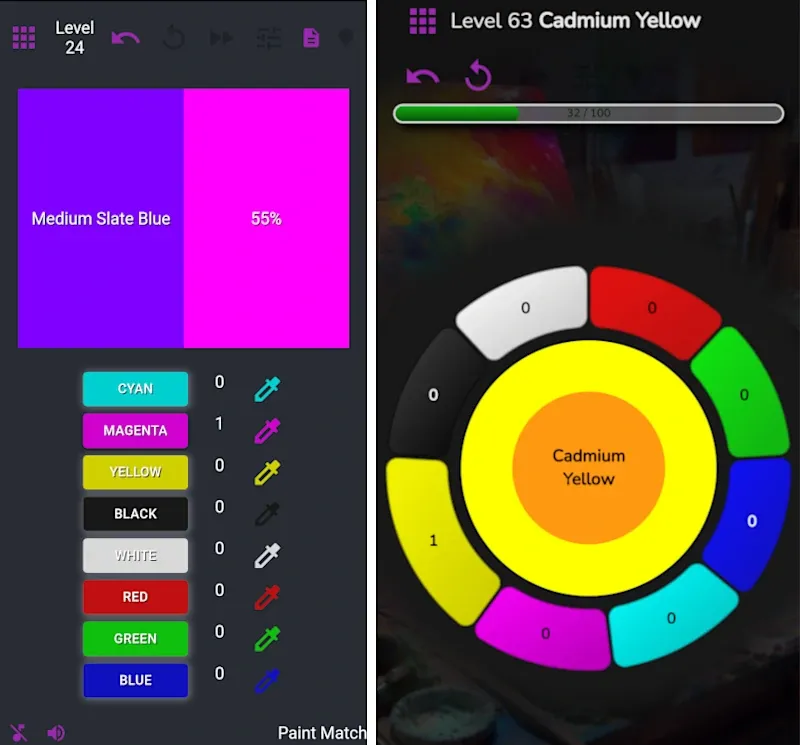
I contracted a few good designers and QAs on Fiverr for a very reasonable price. That gave me both (controversial) redesign idea and some early constructive criticism.
-
-
Marketing and engaging with players
-
I’m very happy I shared the prototype early. The response was so positive and encouraging that it kept me going for a while. Before that I had planned to wrap up the prototype and move on, but instead I put a ton of energy in polishing and making it look nice.
-
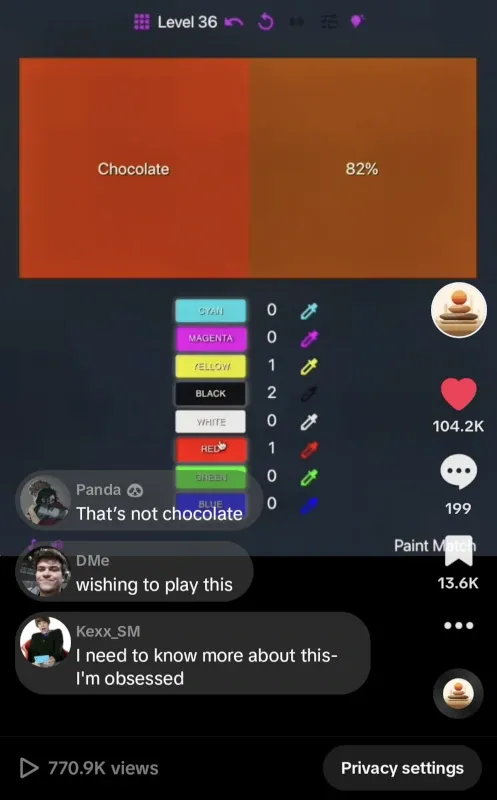
My TikTok video went viral. 770K views and 104K likes on a single clip! I was positively shocked and couldn’t believe my luck.
-
What didn’t go well
- The redesign was not well received by a few original prototype players. I saw some vague parallels with the recent Dodeca Dragons story, so I chose to not take it to heart. Sorry guys if you’re reading this. I love you but I had to prioritize.
- iOS browsers suck, especially on old devices, but even on modern ones. Animations are laggy, SVG gradients are buggy, and the list goes on. I ended up turning off a lot of juice for this platform. Seriously, Apple?
- I wasted some time on integrating Meta APIs to experiment with targeting mobile installs in FB ads. These didn’t work for me. API docs are a mess, libraries are outdated, ads manager tools are a usability nightmare. I’ve heard that only major agencies truly understand how to optimize FB ads, and that seems to be the case.
- A few hobbyist collaborators promised to contribute, but effectively ghosted me. It’s hard to blame them though, the only payment I offered was mention in credits anyway.
- TikTok success wasn’t reproducible, my subsequent clips gave diminishing returns.
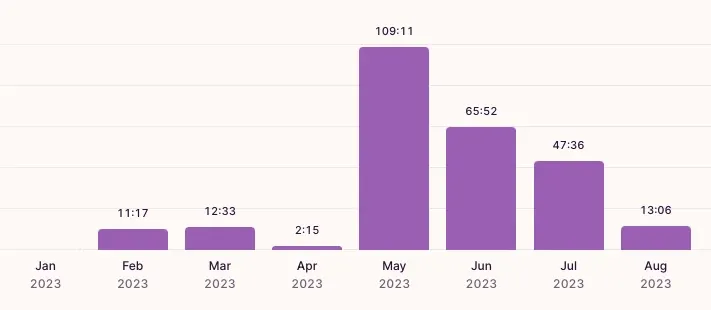
Overall, I spent 262 hours on the game. This includes everything, from learning React to chatting with designers and responding to TikTok comments. If I had worked on the game full-time, I could’ve completed it in 5 weeks. That’s significantly more than I estimated initially, but really, I loved every minute and learned a ton. Most importantly, I believe some people genuinely enjoyed my game, and that warms my heart.